
The Ambition of Oda Nobuna
A modern teen alters a gender-swapped Sengoku Japan.

Wikipedia / Wikimedia Commons
The Ambition of Oda Nobuna (織田信奈の野望; Oda Nobuna no Yabō) is a Japanese light novel series written by Mikage Kasuga and illustrated by Miyama-Zero. An anime television adaptation, produced by Madhouse and Studio Gokumi, aired from July to September 2012. Sentai Filmworks licensed the series and released it with an English dub in December 2014.
The story follows Yoshiharu Sagara, an ordinary high school student who suddenly finds himself in the Sengoku period. He is about to be killed on a battlefield when he is saved by the man who would become Hideyoshi Toyotomi, who dies in the process. Yoshiharu notices differences from his favorite Sengoku video game, *Nobunaga's Ambition*: many daimyos who should be male are female. He begins serving a female daimyo named Nobuna Oda, who nicknames him "saru" (monkey) and corresponds to the historical male daimyo Oda Nobunaga. Yoshiharu hopes to prevent Nobuna from dying at the Honnō-ji Incident, without thinking about returning to the present day.
The story reveals difficulties in Yoshiharu's attempt. Nobuna becomes jealous of other female daimyos attracted to him, and two other people with historical foreknowledge obstruct him. History itself seems resilient: if he prevents one event, an equivalent event occurs elsewhere. Yoshiharu and Nobuna strive to achieve her ambition of unifying Japan and establishing equal trade and diplomacy with European nations. The Honnō-ji Incident eventually occurs. Yoshiharu survives, travels through time and space repeatedly, and finally saves Nobuna. The novel's final pages suggest he successfully rewrote history. A museum in his hometown holds an exhibition featuring Nobuna Oda as the woman who unified Japan and played a key role in the Age of Exploration.
This is Mikage Kasuga's first work, started in 2009, inspired by Noboru Yamaguchi's *The Familiar of Zero* (2004–2017). Both involve a boy transported to another world who works under a girl. Yoshiharu slips into a Sengoku world and becomes Nobuna's retainer, similar to Saito becoming Louise's familiar. Kasuga notes this plot deviated from the pattern of light novels at the time, where characters came to a present-day Japanese school. Based on the differences between Nobuna's world and real history—which the author calls "strangely parallel worlds"—the novel belongs to the isekai fantasy tradition.
Another influence is the traditi
- Author
- Mikage Kasuga
- Illustrator
- Miyama-Zero
- Genre
- Light novel, isekai fantasy, historical fiction
- Anime Studio
- Madhouse and Studio Gokumi
- Anime Aired
- July to September 2012
- English Licensee
- Sentai Filmworks
- English Dub Release
- December 2014
Lore & Background
The series is Mikage Kasuga's first work, started in 2009, inspired by Noboru Yamaguchi's The Familiar of Zero. Kasuga cites NHK Taiga dramas and Ryōtarō Shiba's historical novel Sekigahara as influences. The title references the video game series Nobunaga's Ambition. The novel characterizes many daimyos and samurais as women, with Kasuga citing earlier works for the idea. Characters such as Dōsan Saitō, Yoshimoto Imagawa, and Shingen Takeda survive events in which their real-history counterparts died. The last four volumes introduce 16th century European political figures like Elizabeth I, Don Juan de Austria, and Maurits van Nassau as female characters who never visited Japan in real history.
Reader's Guide
The Ambition of Oda Nobuna holds significance as a work that blends isekai fantasy with historical fiction, reimagining the Sengoku period through gender-swapped characters and a parallel world premise. It reflects a tradition of Japanese light novels that deviate from the school-setting pattern, as noted by the author. The series is evaluated by some reviewers as a well-researched historical fiction, with Shin'ya Yamada recommending it to high school students for studying history. However, it does not follow real history, instead telling a story impossible as historical fact. Tatsuya Tamai regards it as a composition of superficial and fragmented knowledge on history shared through video games or school textbooks. The series' legacy includes its anime adaptation and English dub release, and its exploration of altering historical fate through time travel, culminating in a rewritten history where Nobuna Oda unified Japan and participated in global politics.
Did You Know?
- The series was inspired by Noboru Yamaguchi's The Familiar of Zero, sharing a plot of a boy coming to another world and working under a girl.
- The author cites NHK Taiga dramas such as Ōgon no Hibi and Dokuganryū Masamune, as well as Ryōtarō Shiba's novel Sekigahara, as influences.
- The last four volumes introduce 16th century European figures like Elizabeth I, Don Juan de Austria, and Maurits van Nassau as female characters who never visited Japan in real history.
- The novel's title references the historical simulation video game series Nobunaga's Ambition.
The Isekai Premise and the Honnō-ji Mission
An ordinary high school student named Yoshiharu Sagara is abruptly yanked onto a Sengoku-era battlefield, where he nearly dies. His savior is the man history would later call Hideyoshi Toyotomi, though the rescue costs that man his life. Yoshiharu soon notices the world diverges from the Nobunaga's Ambition strategy game he knows so well: the great daimyos he expected to find as men are instead women. He throws in his lot with Nobuna Oda, a female ruler of Owari who dubs him "saru" (monkey), and vows to steer her away from the Honnō-ji Incident that doomed her male counterpart. The road is far from simple. Nobuna's jealousy over other female lords drawn to Yoshiharu creates friction, while two additional characters with historical foreknowledge actively obstruct his plans. The timeline itself resists alteration—defeating one catastrophe merely reshuffles it into a new form. After the Honnō-ji fire ultimately strikes and Yoshiharu survives, he endures repeated loops through time and space until he finally rescues Nobuna. The novel's closing pages hint he has permanently rewritten history, and a museum in his hometown now displays Nobuna as the woman who unified Japan and shaped the international order of the Age of Exploration.
Literary Roots and the Isekai Tradition
Mikage Kasuga launched this series in 2009 as her debut work, and she has openly acknowledged its debt to Noboru Yamaguchi's The Familiar of Zero, which shares the core premise of a boy transported to another world and placed in service to a young woman. Kasuga noted that this structure deliberately broke from the dominant light-novel trend of the era, in which protagonists typically arrived at a present-day Japanese school. She described the setting as a "strangely parallel world," situating the novel firmly within the isekai fantasy tradition. Beyond that, the series draws heavily on Japan's rich Sengoku-period storytelling heritage. Kasuga cites NHK's Taiga drama series such as Ōgon no Hibi (1978) and Dokuganryū Masamune (1987), as well as Ryōtarō Shiba's 1966 novel Sekigahara and its 1981 TBS television adaptation. The title itself is a nod to the long-running Nobunaga's Ambition strategy game franchise (1983–present), and the first volume even references other games with slightly altered names. Reviewers have praised the work as well-researched historical fiction, and critic Shin'ya Yamada has specifically recommended it to high school students as a useful supplement for studying Japanese history.
The Gender-Swap World and Rewritten History
The most striking feature of Kasuga's parallel world is the systematic gender-swapping of its daimyos and samurai. The author has traced this idea to Haruaki Utsukibara's 1999 work Nobunaga, Aruiwa Taikanseru Andorogyunusu, and she has explained that watching NHK Taiga dramas depict bloody conflicts between rival brothers of Sengoku clans motivated her to imagine a history where changing gender could spare those tragedies. The result is a conquest narrative that deliberately refrains from the mass casualties of the real period. Characters who perished in actual history—Dōsan Saitō, Yoshimoto Imagawa, Shingen Takeda—survive their fateful moments, and their continued presence reshapes every subsequent event. Even the figure of Danjō (Hisahide Matsunaga) draws on Utsukibara's 2003 novel Reimei ni Somuku Mono. While the characters retain their core identities in trivial details, their birth and death dates often shift, and each is given a vivid, memorable impression through appearance, personality, skill set, habits, and distinctive speech patterns. The novel thus tells a story that is explicitly impossible as real history, yet grounded in recognizable historical fragments.
A Cast That Spans Japan and Europe
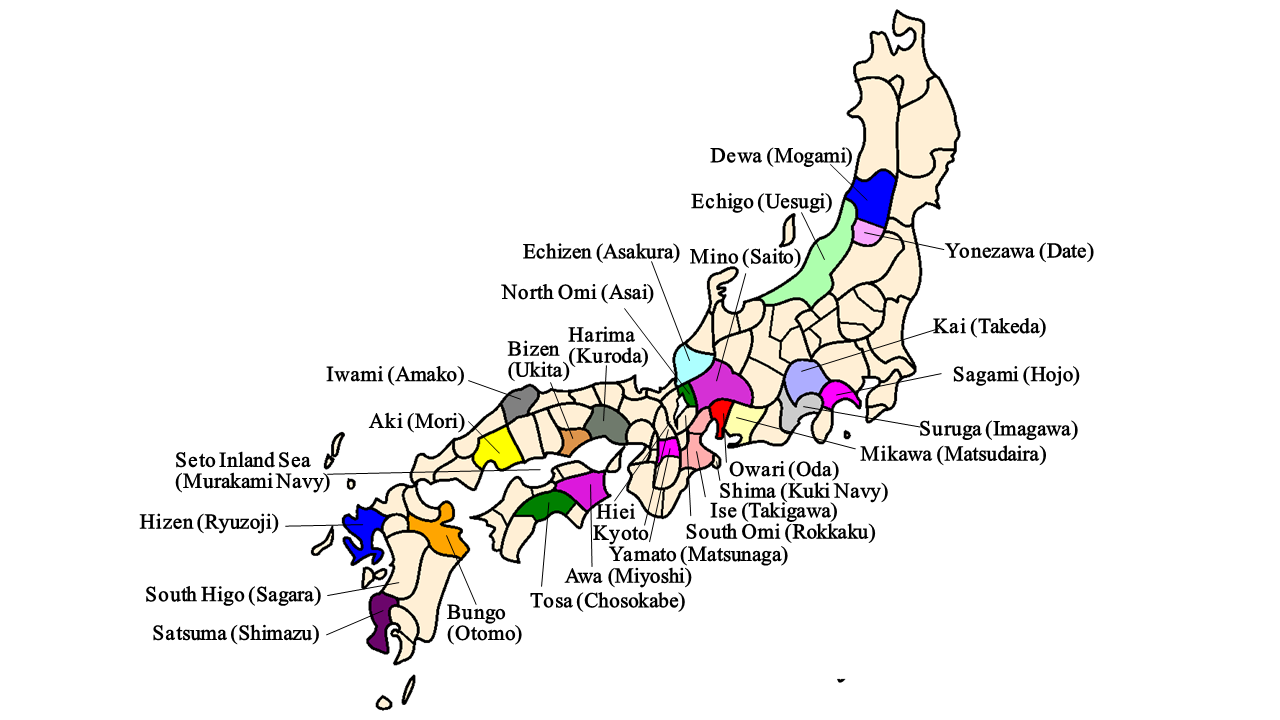
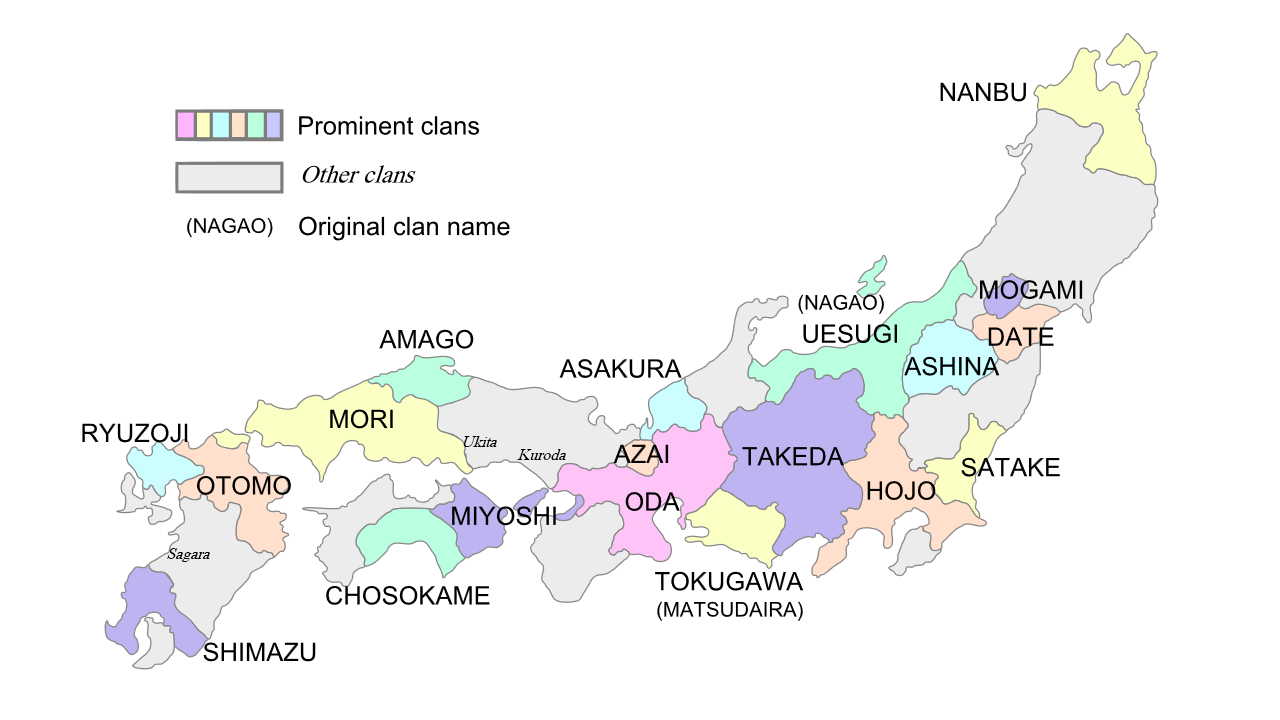
The novel's world-building expands well beyond the Oda clan and its immediate neighbors in Mino, Mikawa, and Suruga. As Nobuna's reach grows, Kasuga introduces an extraordinarily diverse cast: the empress and court nobles, merchants, mercenary soldiers, religious groups, and specialists in literature, art, and tea ceremony. What makes the later volumes particularly bold is the inclusion of sixteenth-century European political and military figures—Elizabeth I of England, Don Juan de Austria of Spain, and Maurits van Nassau of the Netherlands—all rendered as female characters. This global dimension reflects Nobuna's stated ambition: not merely to unify Japan (which she accomplishes in a matter of years, compared to the thirty-year struggle of her male historical counterpart) but to establish trade and diplomatic relations on equal footing with European powers during the Age of Exploration. The anime adaptation, produced by Madhouse and Studio Gokumi, aired from July to September 2012, and Sentai Filmworks released an English-dubbed version in December 2014, bringing this sprawling, gender-bent Sengoku epic to international audiences.
Gallery
Frequently Asked Questions
What is The Ambition of Oda Nobuna about?
It follows Yoshiharu Sagara, a regular high school student who is suddenly flung into a gender-swapped version of Japan's Sengoku period. He ends up serving as the chief strategist for the female Oda Nobuna, guiding her campaigns to unify the warring provinces.
Who wrote and illustrated the light novel series?
Mikage Kasuga authored the novels, with character and background art handled by Miyama-Zero. The series spans fifteen volumes published under the genre of isekai fantasy blended with historical fiction.
What is the gender-swap premise?
Every major historical figure from the Sengoku era—Nobunaga, Hideyoshi, Tokugawa, and their retainers—is reimagined as female or with swapped roles, while Sagara remains the sole male in that world. This setup lets the story reframe famous battles and alliances through a fresh, comedic lens.
How does the story end?
In the final volume, Nobuna's faction succeeds in unifying Japan, bringing the long civil-war arc to a close. Sagara sees his mission as her strategist through to that peaceful resolution, wrapping up the series on a triumphant note.
Is there an anime or English-language release?
Madhouse and Studio Gokumi co-produced a twelve-episode anime that aired from July to September 2012. Sentai Filmworks later licensed the series for English-speaking audiences, releasing it with a full dub in December 2014.
More in Isekai novels and light novels 1-24
Spotted an error? Know more?
This is a living reference — every entry is fact-audited, and reader corrections feed straight into our audit queue. Suggest an edit · See this site's audit record